

[2025 Year in Review] Making the most of what we’ve got
by mistyisles
“I don’t know how many moves I’ve got left. But I’m gonna use them all.”
–Tempest
As I looked back on the K-dramas I’ve watched this year, I noticed a common thread. Each of the heroes and heroines I followed in 2025 found themselves in difficult situations such that all they could do was make the best of whatever hand they were dealt, be it a dream deferred or the looming end of the world as they know it.
Of course, this isn’t unique to 2025 K-dramas. In fact, I think showing us people in such situations — and thereby helping us learn to deal with the same in our own lives — is one of the most important functions of storytelling in general. So I thought I’d use this year-end review to share some of the lessons that K-drama heroes and heroines have taught me this year about handling hardships.
When the Phone Rings: A little communication goes a long way.
This show was an absolute blast, and honestly, half the fun was watching the heroine’s completely unhinged schemes to reclaim both her voice and control of her own life. The dynamic chemistry between Yoo Yeon-seok and Chae Soo-bin also helped sell the more over-the-top scenes, ensuring we felt their longing and rooted for their success even when the writing fell a bit short. Or drove straight off a cliff. Or traipsed through a jungle in search of new kidnappers.
But sandwiched between kidnappings, carjackings, and cliff tumbles that definitely should have been fatal was a surprisingly poignant conversation about — well, conversation. I’m a huge sucker for an “us against the world” romance, because it often involves two people who struggle to trust others learning to trust each other completely. And that can only happen when those two people are open and honest with each other, and when each makes an effort to listen to what the other is saying, even when they’re saying it in unconventional ways.
So while I wouldn’t recommend getting yourself kidnapped to get your loved one’s attention, I do think we can learn from Hee-joo that trust, love, and a healthy partnership must be built on open communication and a willingness on both sides to truly listen to each other.
Study Group: Use the skills you already have to move toward your dreams.
I’m not sure I’ve ever seen a show quite like Study Group. So earnest and wholesome, yet so intensely violent. It’s not at all for the faint of heart, but it’s also very heartwarming. And for having such a short runtime, it also did a great job of fleshing out each of its major characters and their individual arcs. You can bet I’ll be tuning into season two!
As for the lesson, Study Group also presents a textbook (pun intended) example of someone having to make do with what they’ve got — or, in Ga-min’s words, “creating opportunity in hellish places.” In this case: a kid who wants nothing more than academic success but is instead naturally gifted at physical combat, who must quite literally fight for his dream.
School violence aside, I think this show offers a powerful reminder that you don’t have to write off your dream as impossible just because you aren’t currently equipped to make it come true. Instead, learn to use your existing talents and skills to move yourself closer to where you want to be. You might just be surprised by how seemingly unrelated abilities can help propel you forward. No, it’s not always a matter of simply “wanting it badly enough,” but there is something to be said of unrelenting determination and perseverance.
Buried Hearts: Learn when to give up.
More than half a year later, I’m still not sure how I feel about Buried Hearts as a whole. It had a lot of compelling elements — a cautionary revenge tale, the complex and haunting relationship between the hero and his not-always nemesis — but the sum of its parts didn’t quite measure up the way I wanted them to. It did, however, offer an important message about getting everything you want and still ending up hollow.
Like most revenge stories, it began with the hero wrongfully losing everything and vowing to take back what had been stolen. His circumstances are worse than awful, but he makes the best of it and claws his way back into the life he’d carved for himself. But, like I said, this is a cautionary tale, and not an example to emulate.
Which is why the lesson I take away from Dong-joo is the counter to Study Group’s optimism: sometimes, it’s better to just walk away and let the dream die. The key, of course, is being able to discern when to walk away and when to keep fighting. But, taking Buried Hearts as our example here, perhaps some good signs that the dream isn’t worth it include things like nearly being murdered, getting tangled up in fauxcest, and finding yourself screwing other people over to get yourself ahead.
The Haunted Palace: Generational curses can be broken.
For all its epic battles between mythological beings, The Haunted Palace was really a story about seeing the humanity in everyone and working together to right past wrongs. I have a soft spot for tales about younger generations stepping up to fix the problems caused by their forebears, and this show took that a nice step further by having some of those forebears still around having to learn to work alongside the youngsters.
While I love a good monster-slaying, I liked that our shaman’s task wasn’t concerned with slaying at all, but rather helping people-turned-monsters find closure and peace, be it through redemption, reconciliation, or reparations. Plus, it was a treat to watch, with fun character dynamics and beautifully shot rituals.
But, much as I loved our two leads, I can’t talk about this show without making special mention of Kim Ji-hoon’s performance as the complex and compelling king. His journey to accept his own culpability in longstanding injustices was lovely to watch and made him one of my favorite K-drama characters of the year. From him, and the rest of The Haunted Palace’s main cast, I take the lesson that it is possible to end harmful cycles, even if they have been perpetuated for generations.
Law and the City: Lead with empathy.
Law and the City certainly had its flaws, but it did often make me feel like I was meeting up with friends to share meals and learn about their lives. The pace tended to meander a bit, and the messaging wasn’t always the clearest, but I think, at its heart, it was a story about the importance of trying to understand other perspectives. At the end of the day, everyone has their own battles, and we could all stand to exercise a little more compassion toward both the people around us and ourselves.
And, while the exploration of Jun-hyung’s character didn’t always quite hit the mark for me, it did serve as a nice conversation about not ignoring one’s conscience just because it seems like the path of least resistance.
My Troublesome Star: Sometimes, dreams really can come true — they just may come true later than we’d expect.
While My Troublesome Star didn’t always deliver on the promises set by its prologue, and I’d have loved for it to lean into the romance more, it was throughout a feel-good story about second chances. I appreciated that it was both honest about people profiting off taking advantage of others and hopeful about genuine kindness winning out in the end.
It also served as a nice reminder that — aside from certain limitations — it’s never too late to go after your dreams. Despite devastating accidents, emotional turmoil, and family conflicts, our heroine eventually found her way back to the life she’d always dreamed of. As she learned, achieving your dreams may not look quite like you planned when you were just starting out, but they are still worth pursuing if that’s what you truly want to do.
Tempest: Change is a group project.
With its relatively short runtime and ever-mounting tension, Tempest really did feel like a whirlwind. And even though its conclusion might have been a tad simplistic and was certainly very optimistic, it still felt earned. I think a big reason for this is that the story made good use of its ensemble cast, both in terms of acting prowess and in terms of making each character an individual contributor to collective success.
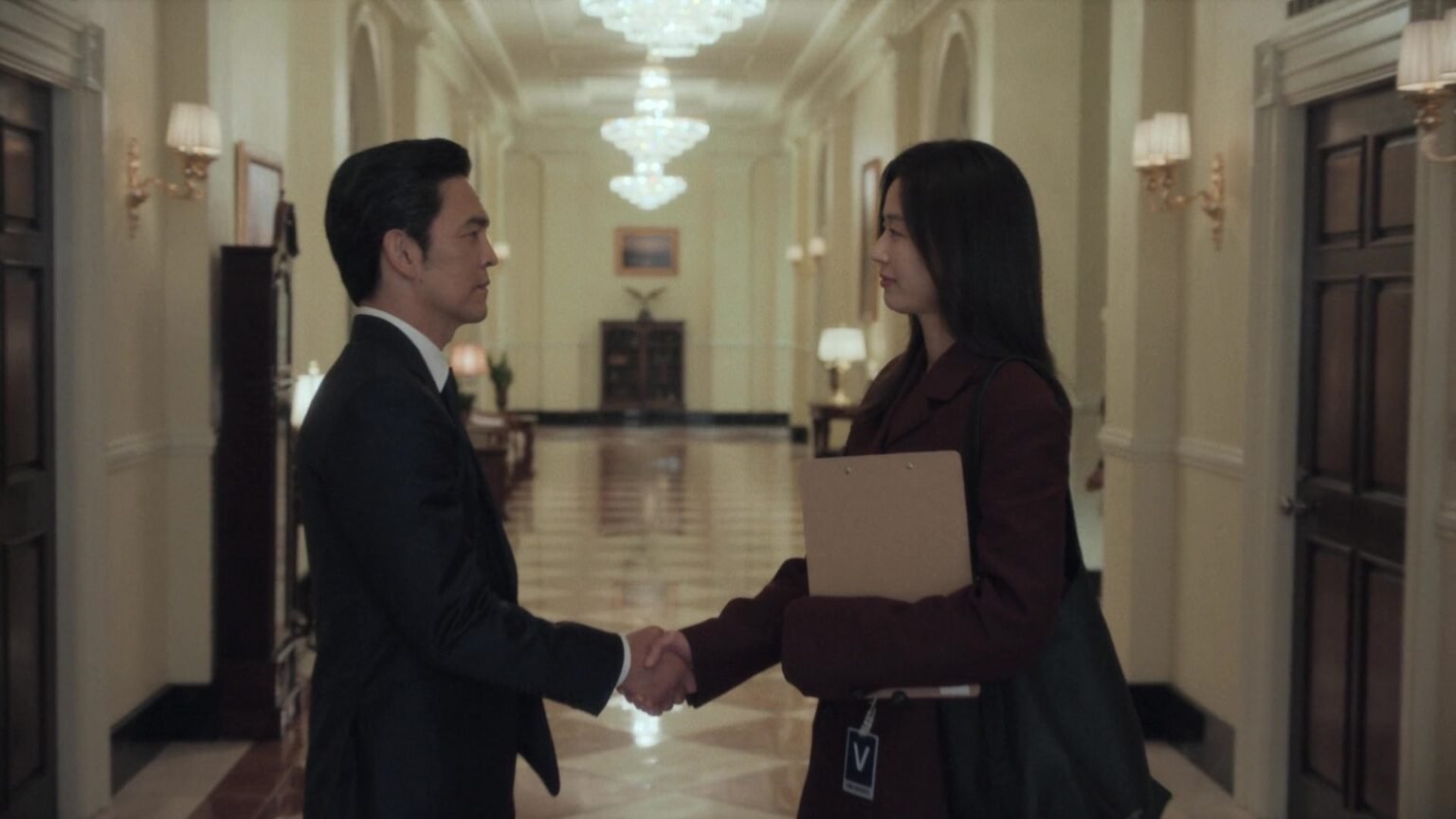
Everyone had an important part to play, from Moon-joo’s gravitas and leadership, to her aide’s unwavering support, to foreign politicians working tirelessly to gather and distribute information, and even a couple of dictators choosing at last to do the right thing.
That’s why, amidst the sweeping bodyguard-diplomat romance, Tempest serves as a great reminder that — while a strong, empathetic leader is extremely important — no leader can enact positive change in the world all on their own. They need people from all walks of life who are willing to work with them toward a better future.
The Murky Stream: You can’t do everything, but you can do something.
Despite a talented cast, excellent cinematography, and the seeds of a great story working in its favor, The Murky Stream suffered greatly from misplaced focus. But its core message still came through loud and clear: most of us can’t fix all the problems in our society or world, but maybe we can help make a few aspects of our communities better.
In some ways, The Murky Stream was the antithesis to Tempest. There was no rousing, optimistic breakthrough of people in power making the right decision and saving their world from self-destructing. In fact, convincing people to work together for anything that wasn’t their own gain at others’ expense was almost impossible. Many of those who tried to protect the common good died in the attempt, and we got no clear resolution on whether their efforts even paid off in the end. Instead, our miserable characters escaped one soul-crushing foe only to face down a whole new war.
And to be clear, none of that makes it a bad story by any means. A heavy one, certainly. And quite bleak in its view of humanity. But where Tempest encourages us to keep working for a brighter tomorrow, The Murky Stream isn’t sure that tomorrow will ever come — but urges us to keep fighting anyway, to ease the pain a little even if we can’t fully cure it.
Ms. Incognito: The best opportunities involve risk.
While Ms. Incognito’s run didn’t quite live up to the promises set by its opening week, it was still a very entertaining watch featuring some very memorable characters. The titular incognito heroine was no exception, and for the most part I greatly enjoyed watching her strive to hold up her end of a truly life-changing bargain — you know, while trying not to lose her life in the process.
Now, I’m not saying I would have taken that deal, necessarily, but I do think that sometimes the fear of taking risks holds us back from seizing truly amazing opportunities in our own lives. How might our lives change for the better if we simply have the courage to grab onto the next big, frightening opportunity and hold on for dear life?
That said, I think another useful lesson we can pull from Ms. Incognito is to enter into risky opportunities with a solid plan of some kind. For instance, if you’re entrusted with a potentially life-threatening secret, maybe make sure it can’t be found out with one simple phone call?
Nice to Not Meet You: Don’t be so caught up in where you’re going that you neglect where you are.
I’ve written a lot already about all the ways Nice to Not Meet You has let me down, so I’ll try not to repeat myself too much. Instead, I’ll make do with what I’ve got and focus on a point I’m still not sure the show meant to make.
Most of the main characters, in one way or another, found themselves in a career path that wasn’t all they’d hoped it would be. Our hero, Hyun-joon, for instance, was typecast as a detective when all he wanted was to branch out into other genres. And then there’s our reporter heroine Jung-shin, who got pulled off the political circuit and forced to cover entertainment gossip instead.
It’s Jung-shin I want to focus on here, because instead of applying her existing skills to become the best entertainment reporter she could be while trying to earn her passage back to politics, she seemed to make it her mission to become the worst entertainment reporter possible. Or, at least, not to put in even the bare minimum amount of effort.
To be totally fair, Jung-shin did get a little better about this as the show went on, ultimately declining the offer to transfer back when it did come. But overall, I’d say she’s a pretty good example of what not to do in the face of setbacks. Because we can’t always control the blows life deals us, but we can choose how we respond to them.
Moon River: Caring for yourself and caring for others don’t have to be mutually exclusive.
Moon River was a story that hinged on self-sacrifice, from the tragic prologue to the final showdown. And yet, it spoke loud and clear against the notion that love necessitates throwing away your own life or sense of self on behalf of the other person.
Which, I think, is one reason the body-swap plotline worked so (surprisingly) well. It didn’t just give our leading couple a fresh perspective on each other’s way of life (though of course it did that, too!); it also taught them how to protect each other by protecting themselves. As a result, they became true partners, able to rely on each other’s strengths instead of each trying to shoulder the burden alone.
Likewise, though, Moon River also explored the other side of the coin — the dangers of a love that turns into obsession, too concerned with protecting itself to realize it’s stifling the other person’s agency. Healthy relationships require trust, and this show did a great job of demonstrating both how trusting each other can get you out of seemingly impossible situations and how forging ahead on your own and disregarding the other person’s feelings can lead to devastating consequences.
So, as we head into the new year, let’s take with us the lessons of 2025. May 2026 be a year of healthy communication, collaboration, resourcefulness, and the tenacity to go after our dreams no matter what hurdles life may throw at us.
RELATED POSTS