

They shelled out quite a big sum.
Just now
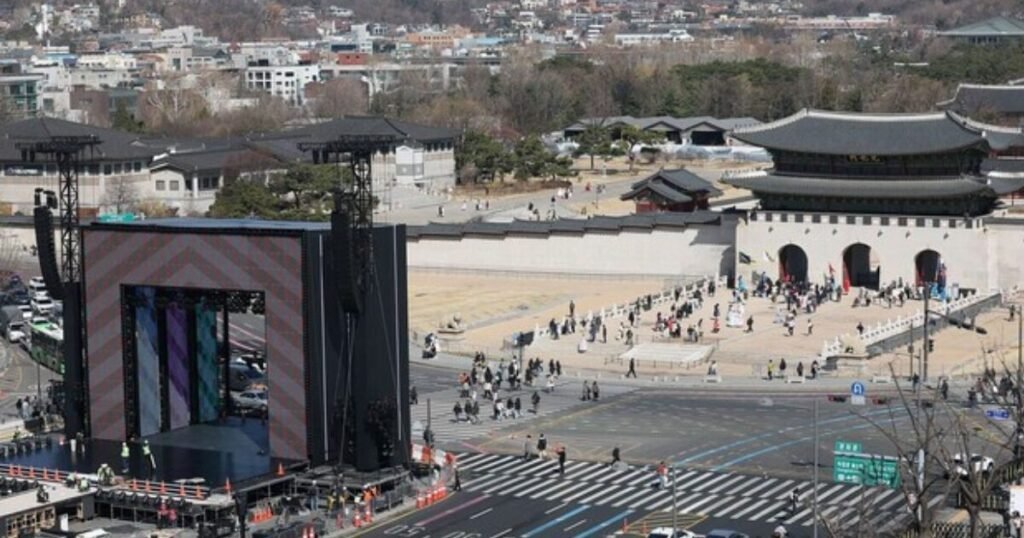
The cost for BTS’s comeback concert agency to use Gwanghwamun Square for one week has been confirmed to be around ₩30.0 million KRW (about $20,100 USD). This marks the first time a single artist has held a solo performance at Gwanghwamun Square.
A Seoul city official stated on March 20 that the fee is governed by the city. The cost is still lower than that of a concert venue, while the government takes on the responsibility to make sure that everything goes smoothly.
“The usage fee that HYBE (which received permission to use Gwanghwamun Square) has to pay is slightly over ₩30.0 million KRW (about $20,100 USD).”
Under the city’s ordinance on the use and management of Gwanghwamun Square, the fee is set at ₩10 KRW (about $0.01 USD) per 1㎡ per hour (6am to 6pm) or 13 KRW (6pm to 6am). Based on this, using the 10,000㎡+ square for seven days, from March 16 to 22, was calculated to cost around ₩30.0 million KRW (about $20,100 USD). This is significantly lower than renting a large-scale concert venue, as Gwanghwamun Square is a public space open to everyone. According to the ordinance, the mayor is responsible for ensuring the square supports peaceful civic activities and healthy leisure and cultural use.
HYBE also obtained permission to use and film at Gyeongbokgung Palace and Sungnyemun Gate, with fees paid to the Korea Heritage Service totaling ₩61.2 million KRW (about $41,100 USD). An official explained that this amount reflects considerations such as lost admission revenue due to the venue use. On the day of the concert, Gyeongbokgung Palace, Deoksugung Palace, and the National Palace Museum of Korea will be closed.
In total, HYBE will pay approximately ₩90.0 million KRW (about $60,400 USD) to the Seoul Metropolitan Government and the national government for the use of public urban spaces and cultural heritage sites. However, public spending related to the event is expected to far exceed these fees. For safety management, over 10,000 personnel will be deployed, including about 6,700 police officers and 3,400 officials from the city, districts, and fire authorities.
There are also significant indirect social costs. Police have requested that civic groups limit or cancel protests at Gwanghwamun Square starting from March 16. In addition, access to nearby buildings will be restricted ahead of the event, and public transportation, bike-sharing services, and surrounding roads will face disruptions, affecting citizens’ daily lives.