

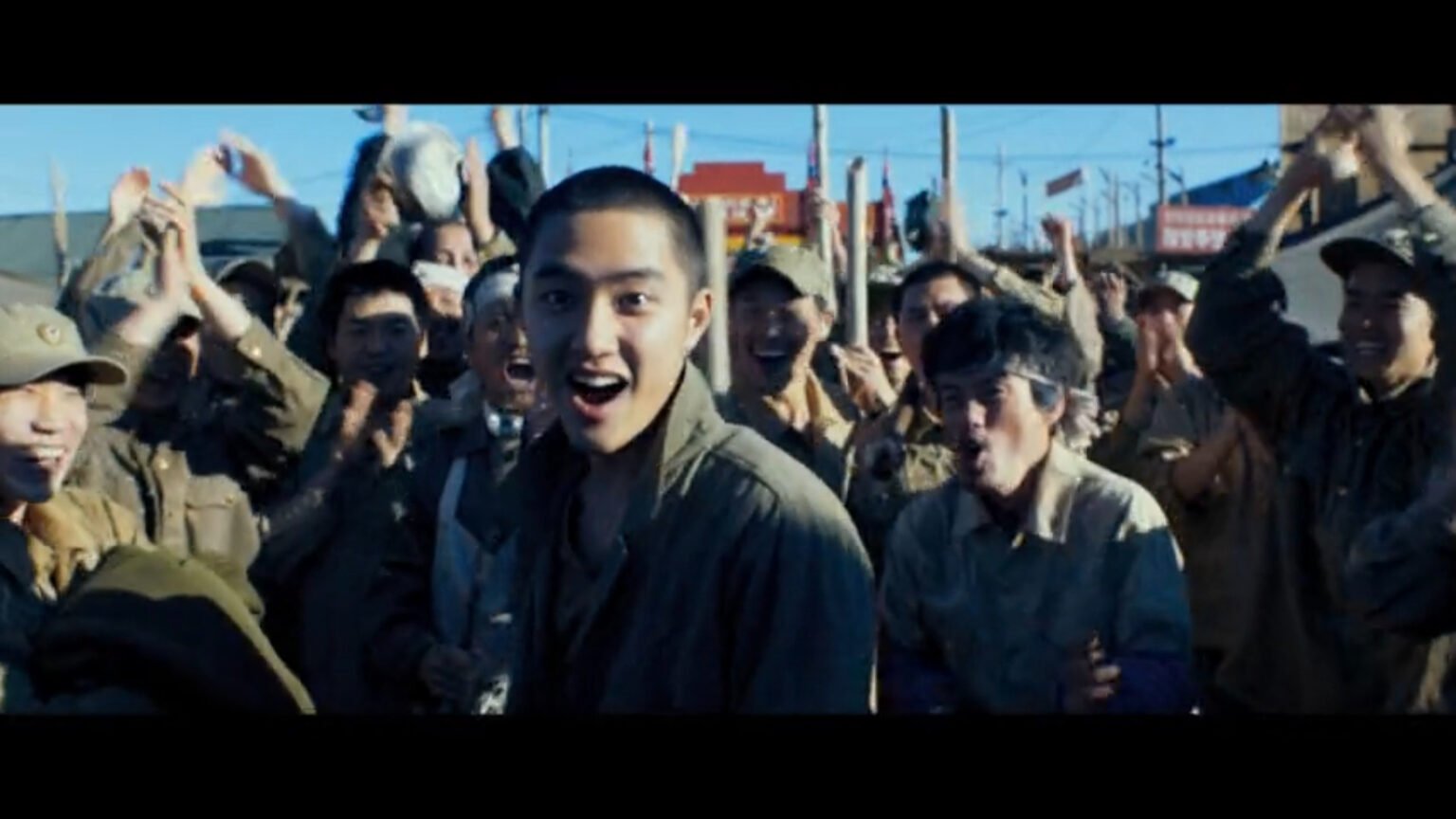
[K-Movie Night] Swing Kids
by Dramaddictally
Welcome to K-Movie Night — a once-a-month feature where we microwave some popcorn, put on a face mask, and get cozy with a Korean movie from yesteryear. With so many films finally streaming (with subs!), now is the time to get caught up on all those movies we missed featuring our favorite drama actors.
Each month, we’ll pick a flick, write a review, and meet you back here to discuss whether or not it’s worth a watch. Super simple. All you have to do is kick up your feet and join us in the comments!
Movie Review
The 2018 film Swing Kids is a historical, musical, dance movie, written and directed by Kang Hyung-chul (who also wrote and directed Sunny), which takes place during the Korean War and — I was told — has a Christmas scene at the end, making it “a good watch for the holiday season.”
Well, I’m breaking format in this post to give the goods up front: this is not a movie I recommend watching for Christmas (or maybe at all). Baeksang for Best Director aside, I struggled to get through this mash-up of storylines and stereotypes, which is ultimately a violent anti-war movie. I’ll go into the full review below, but I don’t want anyone to naively press play on this like I did, so PSA first.
Swing Kids is set in a POW camp in the South, just after the Korean peninsula was split in two. Run by the US military, the camp is having problems controlling the prisoners, who are divided between pro- and anti-communist beliefs, and thus fight amongst themselves. When a new leader is put in charge, he gets the bright idea to form a tap dance troupe to quell the unrest and show the leaders back home “communist POWs dancing the dance of the free world.”
Now, this could go a lot of ways. And what we begin with is a light-ish tone that says we’re about to watch a version of Footloose, but with the war as a backdrop. In these early scenes, we get humor and howling music mixed in with racial slurs, low-level brawls, and refugee women who are now seeking the attention of US soldiers, when what they really want is food.
Had the movie held tight to this tone, while interjecting lively tunes and eye-catching dances, it could have been an enjoyable enough spectacle — finding a place in the tradition of films that gather rag-tag teams to make the best of bad circumstances, no matter how unbelievable “making the best” might be.
But that is not this movie. Instead, the jokey setup takes a violent turn mid-way through, when new characters are introduced, a political plot is unleashed, and many people die. The anti-war message is clear, but the tonal shift is abrupt, and for me, the film’s need for clarity — its over-simplification — is an even larger problem.
We’re hit over the head with anti-extremism themes that favor neither side: the US soldiers and North Korean agents are equally at fault and abhorrent. But from the outset, the dialogue — a combination of English and Korean — feels like it was penned for the sole purpose of making these thematic points, not to give any of the characters life.
We’re left with lines like, “Communism, capitalism, if no one knew about them, no one would be killed.” Or, “Maybe one day you’ll remember you’re all one people and stop fighting over ideology.” I mean, sure. But does this sound like the way people talk? Conversations are scrubbed of any human-ness to ensure the story’s agenda comes through, just in case you missed it.
And by giving the characters these slogans to speak, any intended complexity gets reduced to caricature. For instance, the officer in charge of leading the dance team (Jared Grimes) is a Black American soldier and former tap dancer who’s subject to heinous treatment by the white American soldiers who are supposed to be on the same side. And further, the dance team that develops is made up of pro- and anti-communist Korean men (D.O. and Oh Jung-se), as well as a Korean woman (Park Hye-soo) and a Chinese choreographer with a heart condition (Kim Min-ho).
All of this gives the movie various angles to explore the treatment of different groups. But rather than give any of the individuals a personality of their own — one that we could connect to or feel for — each comes off as a stand-in for an idea: the villainous US soldiers, the communist agitators, the racists, the prostitutes — one stereotype is rolled out after another, undermining what the movie wants to get across.
The only character with real conflict is ROH KI-SOO (D.O.) — the greatest dancer on the team, who’s pro-communist views are in tension with his new love of tap. At the climax, it’s Ki-soo that’s set up to make a choice about which side he’s on — only to be robbed of that autonomy by greater forces.
And here, in the last five minutes — when that Christmas dance scene I was told about finally happens — is where the film’s entire force lies. Unfortunately, it’s not enough to make me feel any genuine emotion for what I’ve just witnessed. In fact, in the end, there’s a purposefully constructed sense that it was all for nothing — the dance team, the war, and maybe even the two hours you just spent on this movie. But if that’s the point — to deliver a film that makes us feel futility, particularly in the face of armed ideological conflict — then perhaps Swing Kids does succeed after all.
Join us in January for the next K-Movie Night and let’s make a party of it! We’ll be watching The Beauty Inside (2015) and posting the review during the last week of the month.
Want to participate in the comments when it posts? You’ve got 3 weeks to watch! Rather wait for the review before you decide to stream it? We’ve got you covered.
RELATED POSTS