

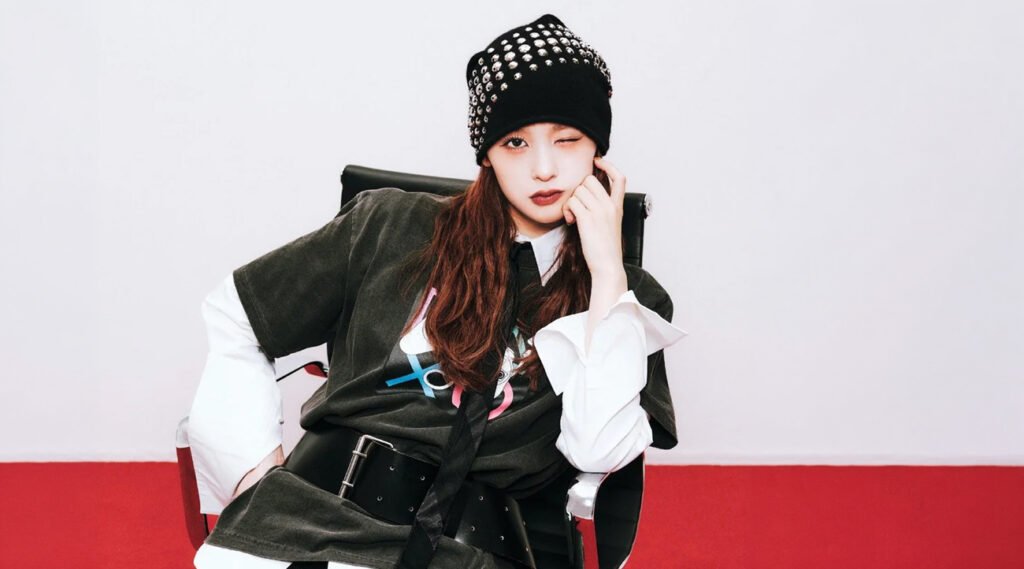
The New Era of a Solo Star
Former ME:I member Ishii Ran isn’t just stepping out of an idol group—she’s logging into a whole new system. After announcing the end of her exclusive contract with Lapone and ceasing activities with ME:I, Ran has quietly but confidently re‑entered the spotlight as a solo artist and model, and her latest campaign with WIND AND SEA x PlayStation feels like the official title screen of her next chapter.
At 21, she brings the rigor of an EXPG‑trained dancer, the warmth of a longtime “dog‑face” visual, and the delicacy of a dreamer who’s walked high‑pressure stages from Girls² to survival shows and back to her own name. Now, instead of just embodying a group concept, she’s allowed to embody two personas at once: “User 1” and “User 2”—two sides of the same gamer soul.
“Ran proves a girl raised between dance studios and game centers can own both worlds at once.”
Dual Personas: User 1, User 2
The second WIND AND SEA × PlayStation capsule is built on duality: the classic PlayStation 1 era in cool blue and the PlayStation 5 era in hot red, lived through the same body. In the campaign, Ran incarnates “User 1” in blue, channeling the late‑90s, CRT‑lit living‑room gamer, and “User 2” in red, a sleek, screen‑lit streamer‑era player holding the latest controller.
This isn’t just a color swap; it’s a fashion‑forward narrative device. Retro graphic tees, Oxford shirts, and ties share the same frame as oversized hoodies and tech‑wear‑inspired layers, blurring the line between gaming uniform and city‑girl streetwear. For fans, seeing Ran switch personas feels like watching a character unlock a hidden route in their own story—her past, her present, and a future that still feels open.
From ME:I Stage to Runway‑Style Campaigns
Ran’s journey from ME:I’s synchronized routines to the WIND AND SEA x PlayStation lens is a masterclass in visual recalibration. In ME:I, she was the sub‑leader and main dancer, known for her “dog‑face” charm, Shiba‑like puppy eyes, and a gap that made her look both unbreakably reliable and adorably spoiled. Her dance breaks in “Click” and survival‑show highlights showed a young woman who could command a stage with precision yet still melt the camera over a smile.
Now, in the PlayStation campaign, that same tension plays out in her styling. The blue look leans into soft, nostalgic textures—thin tees, washed tones, and relaxed layers that nod to the “first save” era of gaming.
The red look, meanwhile, sharpens her silhouette with more structured cuts, bright pops of color, and hardware‑inspired graphics that echo trophies, trophies‑earned choreography, and the glow of a successful mission.
“From idol formation to front‑row streetwear, Ran proves that a girl who grew up between dance studios and game centers can own both worlds without apology.”
Fashion as Storytelling: The WIND AND SEA x PlayStation Look
The capsule collection itself is a visual timeline of PlayStation’s evolution, told through hoodies, graphic tees, Oxford shirts, and even ties—unexpectedly formal touches that nod to the formative “coming‑of‑age” energy of gaming for teens and twenty‑somethings. Controller silhouettes, subtle button symbols, and console‑logos weave into the designs without overwhelming them, so the clothes feel like wearable nostalgia, not costume.
For Ran, the styling becomes a parallel narrative to her own career. The first PlayStation collaboration featured a Y3K, futuristic aesthetic centered on technical outerwear and gaming jerseys, while this second drop leans into the emotional contrast between the PS1 and PS5 eras—just like her own arc from child performer to seasoned idol to solo creator.
As a model, she doesn’t just wear the collection; she performs it, using posture, gaze, and micro‑expressions to signal: this is the me I was, this is the me I am, this is the me I’m still building.
Gaming Culture, Fandom, and Ran’s New Identity
Ran has always existed in hybrid spaces—between girl‑group idol, tokusatsu heroine, and dance‑floor shape‑shifter—so her pairing with PlayStation feels less like a brand stunt and more like a natural collision of worlds. K‑pop fans already know how deep the link runs between gaming and idol fandom: shared streams, late‑night practice sessions, slang and memes that travel from Twitch to Twitter to TikTok. Now, that overlap is formalized in a capsule that lets fans literally dress Ran’s “User 1” and “User 2” reality.
For fans outside Japan, this collaboration is also a subtle invitation into her solo universe.
While ME:I still exists as a group, the WIND AND SEA x PlayStation project signals that Ran isn’t vanishing; she’s branching into fields where she can express her love for music, fashion, and performance beyond the strict architecture of a survival‑show‑born girl group. Wearing her campaign looks becomes a way for fans to feel like they’re part of her “save data”—tracing the same growth arcs, same love for the craft, same determination to keep playing. Wearing her campaign looks becomes a way for fans to feel like they’re part of her “save data”—tracing the same growth arcs, same love for the craft, same determination to keep playing.
Creative Direction: Music, Visuals, and Avatars
If you line up the timeline—Girls², Mirage², Produce 101 Japan The Girls, ME:I, and now her solo‑leaning creative work—the pattern is clear: Ran’s trajectory mirrors the visual evolution of Japanese pop culture itself. She moves from bright, choreographed TV‑unit idol to survival‑show main dancer, then from tightly managed group image to a fashion‑forward solo muse who can embody not one character, but two avatars in one frame.
The PlayStation collaboration leans into that same logic: the music of her earlier years was designed for arenas and TV stages, but the visual language of this campaign is built for social‑first scrolling.
Each shot can be cropped into a phone‑screen wallpaper; each palette can be translated into a TikTok color grade; each outfit can be imitated in a fan‑made showcase dance. The synergy between her movement‑based past and her camera‑driven present makes her the perfect bridge between physical stage performance and digital fashion culture.
The Fandom Feels: Why Fans Ship Ran x Fashion
Scattered across Reddit, X, and Instagram, fans are already calling these looks “thirsty” and “vintage‑future” in the same breath. For many, seeing Ran step into 9090 Store visuals and now WIND AND SEA x PlayStation is bittersweet: it underlines that she’s officially emerging from under the ME:I banner, but it also shows that her star power is only growing.
Supporters lean into hashtags and art tags that treat her as both a soft visual goddess and a hard‑working dancer, celebrating her “dog‑face,” her abdominal‑line‑show dance breaks, and her quiet, ISFJ‑like reliability.
Now, when they see her in a PS‑logo tee, they aren’t just fans of a former idol—they’re customers of a lifestyle, curating a wardrobe that echoes the same themes of growth, nostalgia, and progress that Ran’s career has always carried.
What This Means for J‑Pop and K‑Pop Fashion
Ran’s campaign sits at a crossroads where Japanese streetwear, gaming, and K‑pop–style visuals converge. WIND AND SEA’s partnership with PlayStation has already birthed a Y3K‑leaning unisex line; now, by casting someone like Ran—who’s so closely tied to dance‑driven idol performance—the collaboration becomes a subtle statement about the global future of idol fashion.
More and more, fans don’t just want merch; they want wearable motifs that feel like part of an ongoing story. By choosing Ran to personify dual eras of PlayStation, WIND AND SEA signals that fashion campaigns can be narrative‑driven, almost game‑like, with “levels,” “avatars,” and unlockable aesthetics.
For readers scrolling through this article on a phone, that’s the real takeaway: Ran isn’t just in a campaign—she’s teaching the next generation of idols and fans how to build a visual save file that spans music, screen time, and street style.