

It definitely leans towards fiction.
2 hours ago
A historian has weighed in on the hit K-Drama Perfect Crown, offering a detailed analysis of its historical elements, and where it falls short.
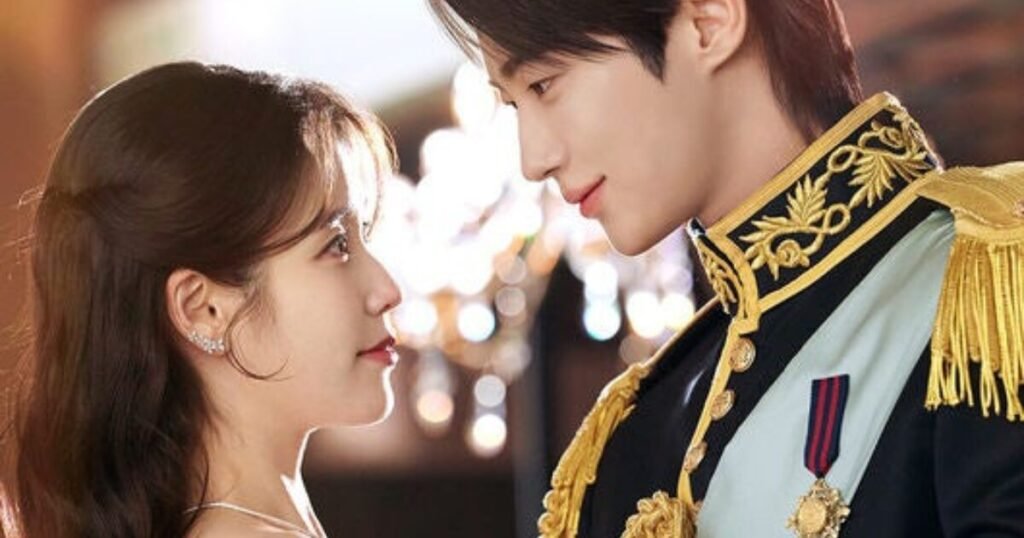
On April 28, historian Shim Yong Hwan uploaded a video reviewing the drama, which stars IU and Byun Woo Seok. In the video, he explored how the series fits into the growing trend of alternate history storytelling, a genre increasingly popular in webtoons and web novels. Shim acknowledged the appeal of such works, noting that their strength lies in expanding imagination. He fact-checked elements such as the historical background of why constitutional monarchy did not continue in Korea, as well as the flower-falling game, hanbok design, and titles shown in the drama, emphasizing that cultural experimentation goes beyond history to create new culture.
“Alternate history works like Perfect Crown are a popular trend in webtoons and web novels these days. The advantage is the expansion of imagination, and if based on solid evidence, they can become much more refined works.”
Despite this, he pointed out several areas where the drama lacked accuracy, including scenes like the palace fire and certain cultural details. One of the biggest talking points was the drama’s central premise, a modern-day constitutional monarchy in Korea. Shim explained that, historically, this scenario is highly unlikely.
He argued that after the fall of the Joseon dynasty, the royal family failed to maintain influence, citing figures like Crown Prince Yeong and even referencing how former President Syngman Rhee treated the monarchy after liberation. He also noted that portrayals like The Last Princess tend to be overly romanticized.
“The reason constitutional monarchy did not continue into 21st-century Korea is, sadly, because the Joseon royal family did nothing after its fall. Crown Prince Yeong wore a Japanese military uniform and played a collaborator role, and there is even a photo showing a composition where President Syngman Rhee appears to disregard him after liberation. The film The Last Princess is heavily beautified by nationalist sentiment, but in reality, Princess Deokhye did almost nothing.”
He continued, addressing whether it would be possible for Grand Prince Ian (Byun Woo Seok) to hold real power on behalf of a young king. The drama’s portrayal of royal power structures also drew criticism. Shim stated that the idea of a royal relative like Grand Prince Ian holding real power would have been impossible in Joseon history, as strict systems were in place to prevent such interference.
“Historically, it is impossible. Joseon was a country that strictly blocked interference from royal relatives. After King Sejo’s betrayal, they never gave power to royal relatives. Heungseon Daewongun also ruled as regent only in a special situation where royal authority was extremely weak, but he stepped down after Choi Ik Hyun’s petition. But since the drama’s main character is Byun Woo Seok, what can you do?”
He also touched on details like titles and costume design, explaining that certain choices shown in the drama would have been considered serious breaches of royal etiquette, though he acknowledged these as likely creative decisions.
“Terms like yeonggam and daegam indicate the scope of official ranks. In the drama, mixing royal attire patterns or loosening a dragon robe would, by etiquette, be punishable by beheading, but I see it as an area of design consideration.”
Despite his critiques, Shim ended on a positive note. He described the drama as part of a broader cultural movement, saying that while it may not be historically precise, it represents an interesting experiment in modern Hallyu storytelling.
As Perfect Crown continues to gain popularity, with ratings reaching over 11%, the conversation around its balance of history and fiction is only growing.